Category Archives: road safety
New Year Ride
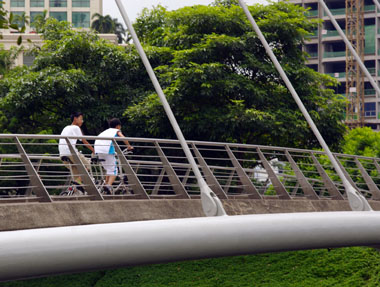
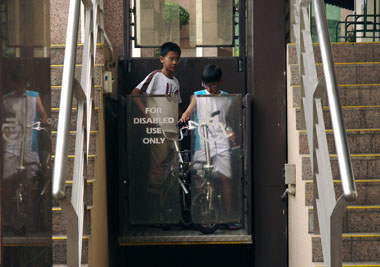
2009-01-01, the New Year day. Great weather and my boys were anticipating the first ride of the year – first time for them to ride all the way from Geylang East to Great World City. Most of the routes were along the scenic Kallang River and Singapore River. To reach Kallang River from Geylang East, we had to use pavements and a few segments of small streets. Luckily the streets were quite and safe.
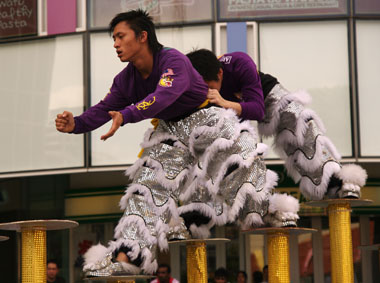
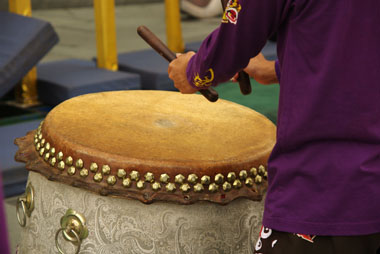
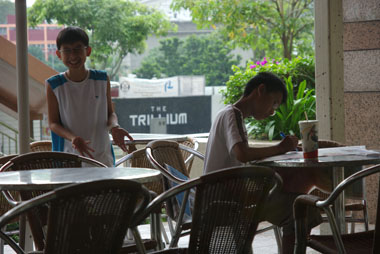
We were attracted by a lion dance rehearsal in front of the Central Mall, later we decided to have brunch in the mall. From the 4th floor of the “Dinning Room” Food court, the shop houses looked like colorful toy houses arranged neatly along the Singapore River. The boys still want to go further and we also need to do some shopping so we cycle further to the Great World City at Kim Seng Road. I waited outside to have a coffee while looking after the bikes. Sharon and the boys went to do the shopping.
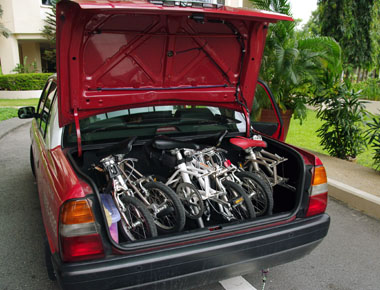
After that everyone was tired so we took a Taxi directly from Great World City back home, with 4 folding bike in the trunk.
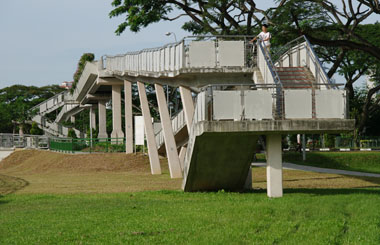
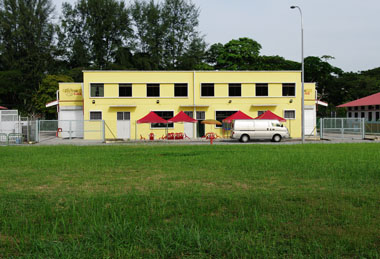
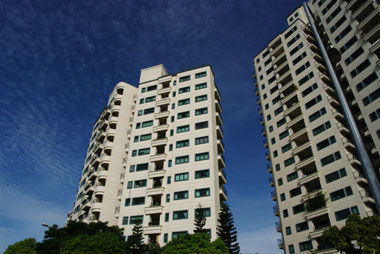
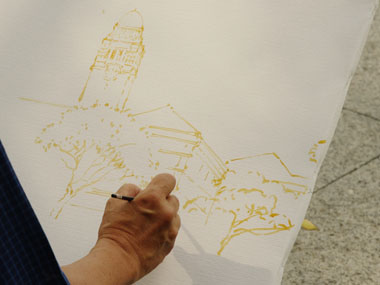
I didn’t realize we’ve seen so much along the way until I reviewed the photos:










The greatest engine on earth
You’re born with the GREATEST engine in the world – The hardest you push it, the strongest it becomes.
Use it when you can!
Merry X’mas and Happy New Year!
Jz88 user’s feedback of ‘Foldable Bicycle Trial on Trains and Buses’
Thanks for all who have feedback. Here is a complied list of all the contributors:
1) What I like about the trial:
I can travel a long distance on public transport and then cycle to the exact point I need to go. Healthy, green, convenient and save money!
No need to walk a long distance or wait for shuttle bus
Bus drivers and MRT personnel are pleasant toward folding bike users.
On the road, I noticed SMRT bus drivers are more cautious toward cyclists
The possibility to use MRT/bus come in very handy when it rain.
2) Problem/issues I faced during the trial:
I can’t use the folding bike during peak hours
Sometimes the train/bus is too crowded for folding bike to board
On Buses, I need to squeeze through a narrow passage before reaching the open space near the exit of the bus
There is a social stigma against cyclists. I get the feeling that Taxi drivers and large truck drivers really don’t like cyclists on the road.
A few times I had to stop quite dangerously to avoid knocking into cars that try to cut in front of me to turn left.
I notice some cyclists are quite rude toward pedestrians, as if they own the pavement.
3) Improvement suggestions:
Allow folding bikes at all times, not just peak hours. Otherwise there should be theft-proof parking facilities in MRT station.
Allowed folding bike to board from the exit (near to the space for wheel chair)
Allocate a “cyclist cart” on each train (remove all the seats) for folding bike /bulky objects. This helps to ease the conflict between passengers and folding bike cyclists.
Have operator to run a “folding bike share” program along all the MRT stations. User can pick up from any station and drop off at another station. SMRT can use the MRT to relocate the bikes to balance the demand in each station.
Improve road safe (e.g. reduce car speeds), especially in busy area near to the stations or shopping center.
Mark out a bicycle lane on road/ or on pavement where fast traffic is dangerous for cyclist.
Add bicycle rack in front of SMRT buses.
Read more:
LTA “Fold it and Ride it” trial on MRT and Buses
How to bring folding bike on Buses?
How to bring folding bike on MRT?
Mini-roundabout or cross junction?
Just found this excellent video from Youtube showing an innovative idea, may be strange to Singaporean but quite common in Europe, call a mini-roundabout.
The idea is counter intuitive for those who are used to follow the traffic lights at traffic junction. The idea of mini-roundabout to resolve conflict at traffic junction is based on the same principle as indicated in yesterday’s post (Vision Zero), that in locations with possible conflicts between pedestrians and cars, the speed of cars should be reduced to below 30km/h. Here the system designer is not relying on traffic signs and speed camera. It is the physical environment design that ensure when cars approach the roundabout, their speed will have to be reduced to below 30km/h.
How does the system designer do that?
1- by making the roundabout small in size. When car need to make a small turn, they have to slow down.
2- by ensuring open visibility of on coming traffics from all direction, that provide time space for the drivers and other road users to negotiate with each other.
3- by marking the road so that it is very narrow as approaching the junction- this provide a safety-island for pedestrians who need to cross, and at the same time further ensuring the cars are slowing to a safe speed.
All of the above factors contributed to the effectiveness of the solution, no traffic light, nor even signs. The principle is to remove the traffic signs so that the drivers can focus on the road and other road users to ensure safety of everyone.
Since there is no traffic light to control the traffic, the surprising result is that the traffic flow is better and safer around such sign-less junctions. Here is another example comparing two types of junction:
Here is another Youtube video showing some car accident on traffic camera. It shows how dangerous cross junction can be due to difference in speed, even in safe Japan. I feel really sad for the little kid cycling cross a small road and got crashed by a car. This is exactly the kind of situation system designer can helps to avoid by designing the space right for human being, not just for automotive.
Yet another example from Holland, this time showing how a cyclist safely ride through (from far left to far right, from 11 sec. onward) the roundabout and many moving cars without a single stop.